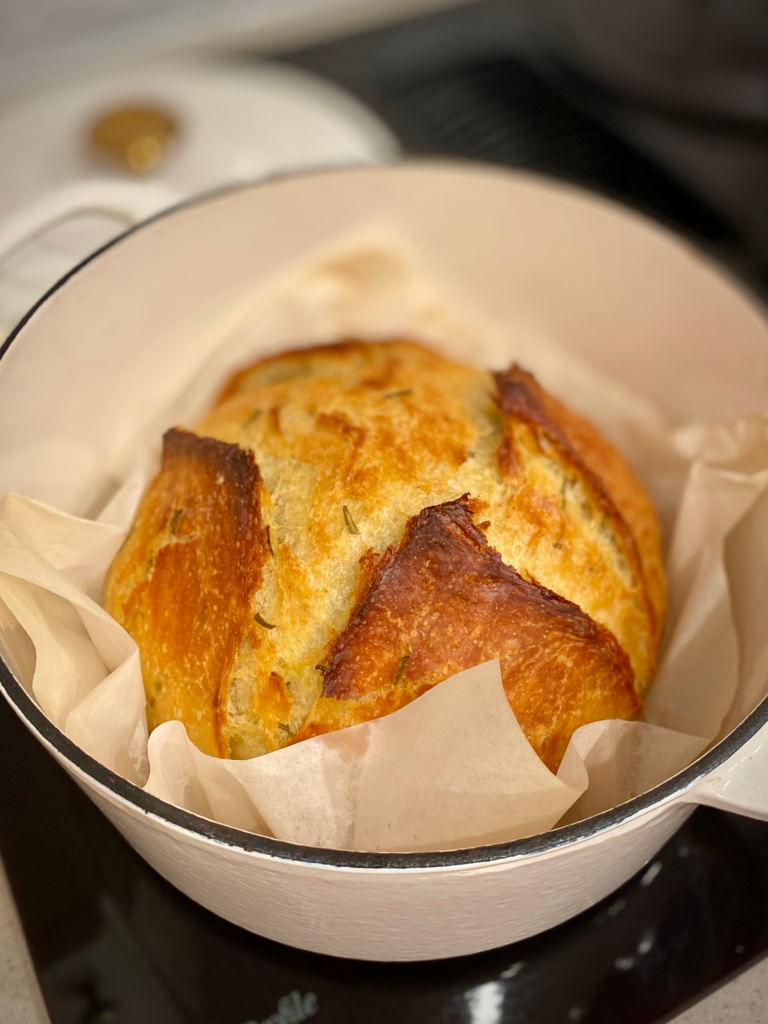

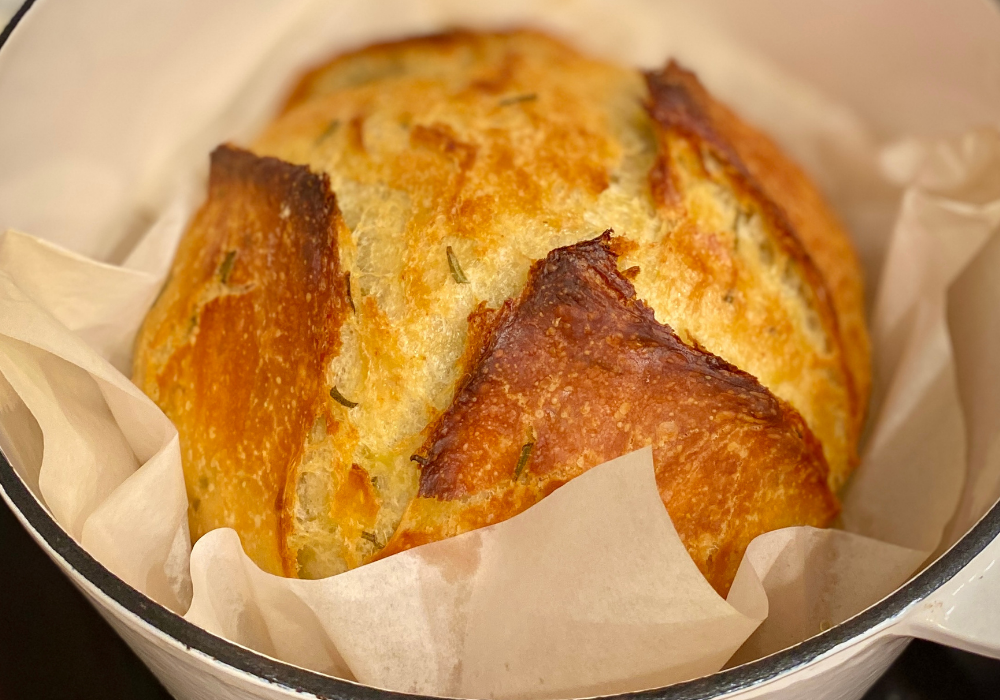
I owned cast-iron Dutch ovens for years but always thought of them as just camping cookware. And since my idea of camping has always been a hotel…well…those Dutch ovens remained pretty much consigned to a shelf in the garage in practically pristine condition. I even eventually donated them to other more outdoorsy families hoping to give them a better home so they could live fuller lives. It wasn’t until years later, when I discovered No-Knead bread recipes that absolutely required Dutch ovens to perfect their crumb and crust, that I repented of my ignorant ways and began restocking my kitchen (not my garage) with cast-iron. Today I’m the proud owner of several varieties but, for this recipe, I can’t get enough of my Lodge 5-quart Dutch oven. Try this recipe, and you’ll see why!
The Ingredients
- 3½ cups (560g) all-purpose flour
- 2 tablespoons chopped, fresh rosemary
- 1 tablespoon (12g) instant or rapid-rise yeast
- 2 teaspoons (10 g) coarse kosher salt
- 2 teaspoons (8g) granulated sugar
- 1½ cups (355g) warm water (105°F to 110°F)
- 1 ½ tablespoons (14g) extra virgin olive oil, for the recipe
- 2 tablespoons extra virgin olive oil, for drizzling the bread during the baking process
The Method
- Add all the dry ingredients to the bowl of a heavy-duty mixer, fitted with the paddle attachment, and mix until incorporated. In a Pyrex measuring glass, add the warm water and oil. With the mixer on low, add the water and oil to the dry ingredients and mix for about 1 minute until a shaggy dough forms.
- Scrape the dough into a dough bucket, cover it with a lid, and allow it to rise on the countertop until doubled in size, about 2-4 hours. At this point, you may either put it in the fridge for up to 5 days to develop a more sourdough flavor or simply proceed with the next step in the baking process.
- Turn out the dough onto a lightly floured surface, and shape it into a tight ball. Place the dough ball on parchment paper. Dust the top with flour and lightly cover with flour-coated plastic wrap or with the inverted dough bucket lightly coated with non-stick spray. Allow the dough to rise 30 to 40 minutes if the dough is at room temperature, and 45 to 50 minutes if the dough is cold. When fully raised and just prior to baking, slash the dough with a large “x” using a lame (pronounced LAHM, meaning “blade” in French) or with a very sharp knife.
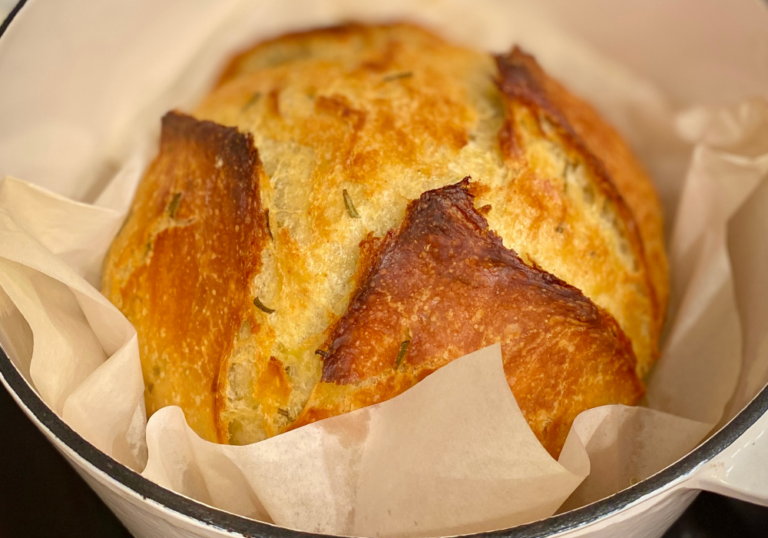
- Place a cast-iron pot with a lid in a cold oven and heat the oven to 450°F. Allow the pot to heat for at least 30 minutes. Carefully transfer the risen dough, along with the parchment paper, to the hot pot, put the lid on, and bake for 30 minutes. After 30 minutes, remove the lid and drizzle the top of the loaf with the extra virgin olive oil, return to the oven, and bake, without the lid, for 5 to 10 minutes more. The bread is done when an instant-read thermometer reads the center of the loaf as 195°F. Remove from the oven and allow to cool for 10 minutes in the pot, then transfer to a wire rack for an additional 10 minutes prior to slicing.
Tips
- If you don’t have parchment paper, dust the countertop with flour again before placing the rising dough on top of it to prevent sticking as it rises. When ready to bake, remove the heated pot from the oven, coat the inside of the pot with olive oil using a heat-proof silicone pastry brush, sprinkle cornmeal into the bottom of the pot, and then add the slashed, risen dough. Replace the lid and bake as directed. I use an oiled small pizza peel to transfer the dough to prevent myself from getting burned on the hot Dutch oven pot when adding the dough.
- If you have leftovers, simply store them in a bread bag in your pantry. Refrigeration dehydrates bread. Leftovers last about three days in the pastry but as with most homemade breads without artificial preservatives, fresh is best.
- This freezes so beautifully, I sometimes make a double batch, serve one and freeze the other to save time for future meals. Before freezing, allow the loaf to cool to room temperature, double wrap in foil, and place in a gallon-sized freezer bag, labeled, and freeze for up to 3 months. To reheat, place the foil-wrapped loaf in a preheated oven at 350°F for 20 minutes if defrosted, and 35-40 minutes if frozen.